

💬 “I teach 5th grade. My readers range from 2nd grade to 5th grade level. Should I even be trying centers or extended independent/collaborative practice?”
I get questions like this all the time. Because it’s not just that our students are behind. It’s that they’re all over the map.
What Does a Mixed-Level Class/Wide Range of Readers Actually Look Like?
You’ve got some students reading on a 2nd or 3rd grade level. They’re capable of tackling the skills, but they can’t do it with a full-blown grade-level text.
You’ve got others who are approaching grade level and really benefit from meaningful, manageable reading work that builds their confidence.
Then you’ve got the kids who are reading at grade level, but they’re not engaged. They’re coasting. Or checked out. Or finishing in two seconds flat.
And if you’re lucky, you’ve got a handful who can handle everything you throw at them, and you’re just trying to keep them appropriately challenged.
(And the reality is, you may also have outliers reading on a kindergarten or 1st grade level.
This post doesn’t focus on that situation specifically because those students typically need a separate layer of support with rigorous intervention.)
Let’s Talk About the Real Worry
When teachers ask if centers or independent practice are worth it, what they’re really asking is:
- Will they stay on task
- Will they learn anything
- Will it be wasted time for me and for them
And the answer to all of those is yes if the structure doesn’t support the range of readers in your room.
But here’s the good news:
You don’t have to abandon collaborative or independent practice. You just have to rethink how you deliver it.
Because the truth is, you can meet a wide range of readers where they are and still hold them to high expectations without standing over their shoulder every minute.
The Myth: If It’s Not Grade-Level, It’s a Waste of Time
One of the biggest mental blocks upper elementary teachers face is this:
“If I’m not giving my students full-length, on-grade-level texts, I’m wasting precious time.”
But here’s what’s actually true:
Short texts, scaffolded tasks, and differentiated resources are not a step away from grade-level.
They’re a bridge to it.
Students don’t magically master rigorous skills by being dropped into a five-paragraph passage with a multiple-choice test. They build those muscles in layers and with formats and materials that meet them where they are and nudge them forward.
It’s not about lowering the bar. It’s about creating access points and opportunities to actually practice the skill.
What Works? Here’s What I Did in My 5th Grade Classroom
1. Use Short Texts That Still Hit the Skill
When students get overwhelmed by the length of the text, they often miss the point entirely.
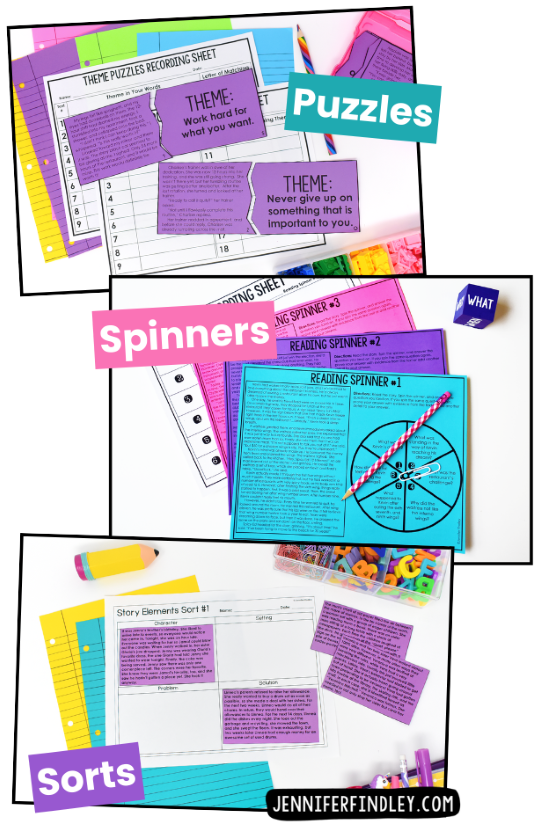
Instead, I gave them short texts and I added novelty as an extra bonus. This looked like:
- A puzzle format
- Spinner questions
- Directions to sort the texts
- Task card format
These activities gave students the chance to practice main idea, theme, inference — all the skills — without struggling with a lengthy passage.
The skill stays rigorous, and the text is accessible.
2. Structure Collaboration as a Scaffold
Collaboration can be a great scaffold. When students work together on purpose, it makes hard tasks feel possible.
Let’s say I assign a reading sort where students categorize short stories by theme.
If I pair students with complementary strengths, they can:
- Read the story out loud together
- Decide on the category
- Explain their thinking before moving on
Now the text is more accessible, and they’re practicing communication, justification, and deeper understanding.
3. Preview the Activity in Small Group First
This was a game changer for my students who were reading far below grade level.
Here’s how it worked:
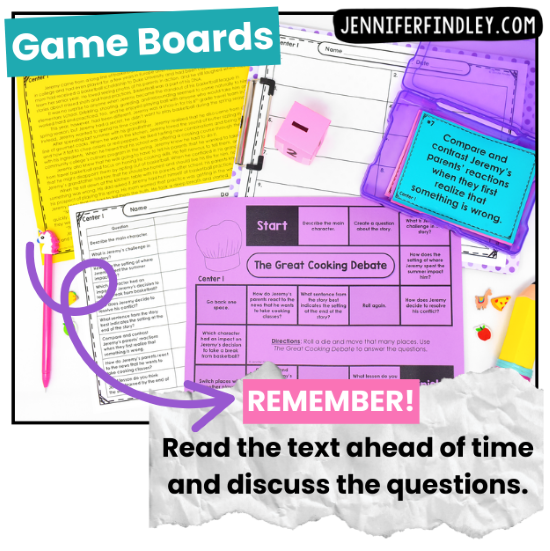
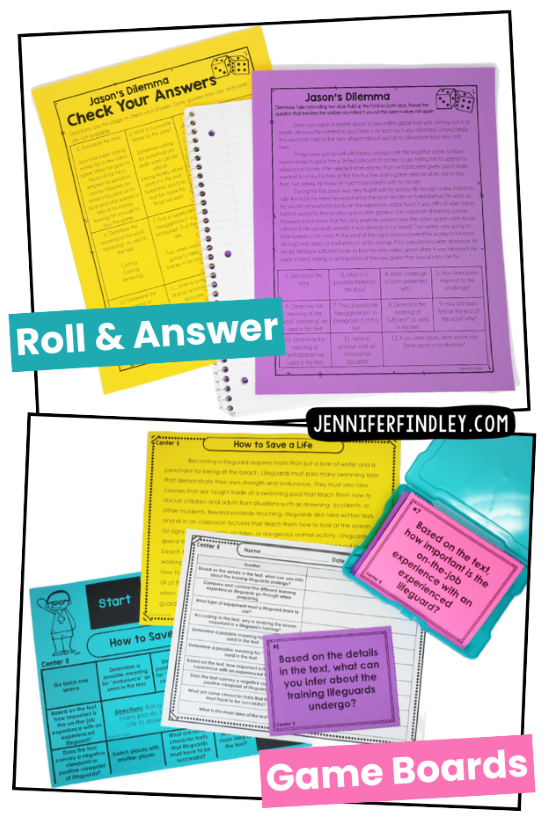
Let’s say I planned to have a group use my Reading Game Boards as a center.
Before releasing them into collaborative practice, I would:
- Read and discuss the text in small group
- Go through the questions orally
- Practice thinking through a few answers
Then they’d take the same game back to their center and play it.
Did I give them the answers? Not really.
What I gave them was:
- Confidence
- Context
- A chance to actually practice the skill instead of freeze up
Because they’d already done the heavy lifting with me, the game was now a place to rehearse and reinforce that thinking instead of guessing their way through it.
4. Use Digital Tools to Differentiate Easily
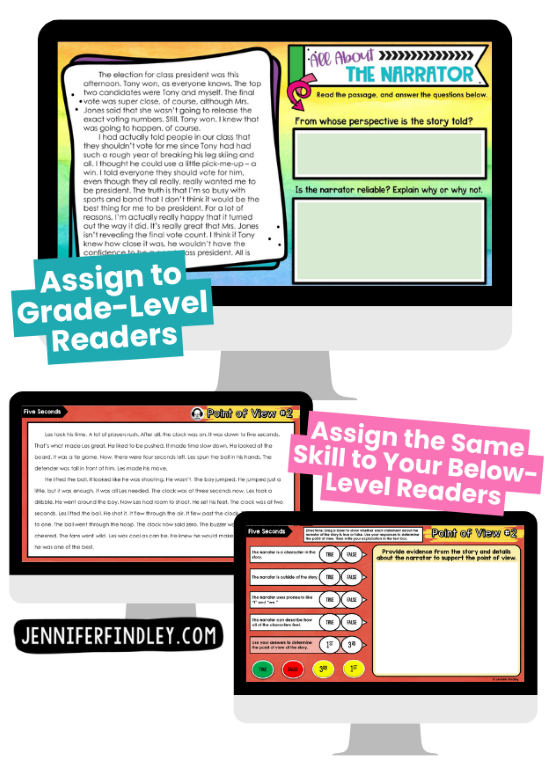
One of my favorite ways to meet a wide range of reading levels was with digital reading tasks.
I could assign completely different texts or versions of the activity and students didn’t even know they were getting something different.
Let’s say we were practicing point of view/perspective:
- My grade level readers might get a standard passage and question set
- My below level readers might get a specific activity designed for their reading level but still accessing the skill
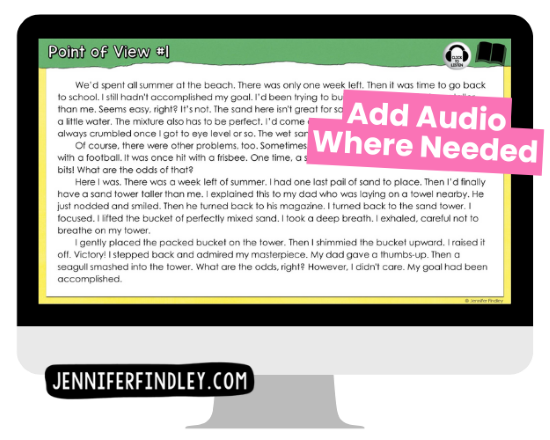
5. Add Audio Support Where Needed
For students who need it, even a simple audio recording of the passage being read aloud can make the task 100 percent more accessible.
It doesn’t mean they’re not doing the work. It means they’re getting the access they need to do it well.
6. Make It Routine, Not New
The more consistent your centers or activities are, the less time you spend explaining and the more time your students spend learning.
I used activities like:
- Puzzles
- Game boards
- Sorts
- Roll and Answer centers
- Spinners
These repeatable formats were utilized with different texts or skills. That way students already knew what to do even if the story or skill was new.
Ready to Try This in Your Classroom?
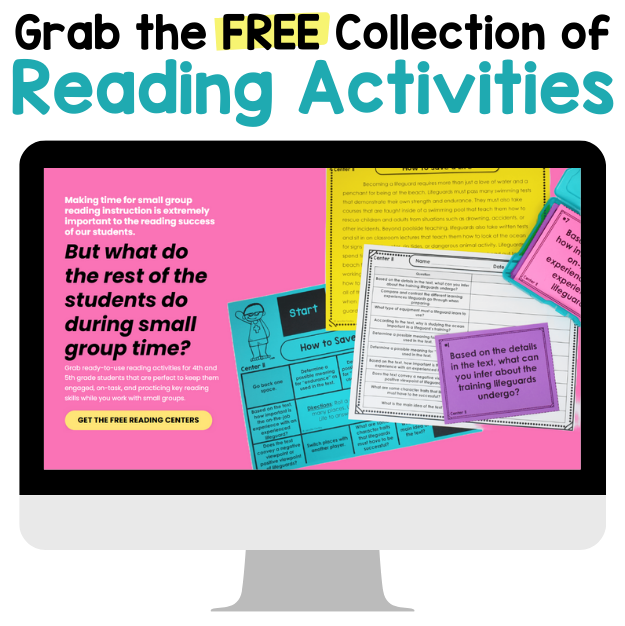
I created the FREE Reading Activities Collection to help teachers do exactly this.
It includes:
- 9 ready-to-use reading centers designed to support a range of levels
- Hands-on formats like puzzles, spinners, games, and sorts
- Built-in teacher supports like student checklists and assignment slides
These are the exact activities I used with my 5th graders to help them build real reading skills through independent and collaborative work.
👉 Click here or on the image below to grab the free collection.
I really need those 2nd/3rd grade level activities.
Interested in the Reading Intervention Centers, but not quite sure yet? Test drive the resources before you buy.
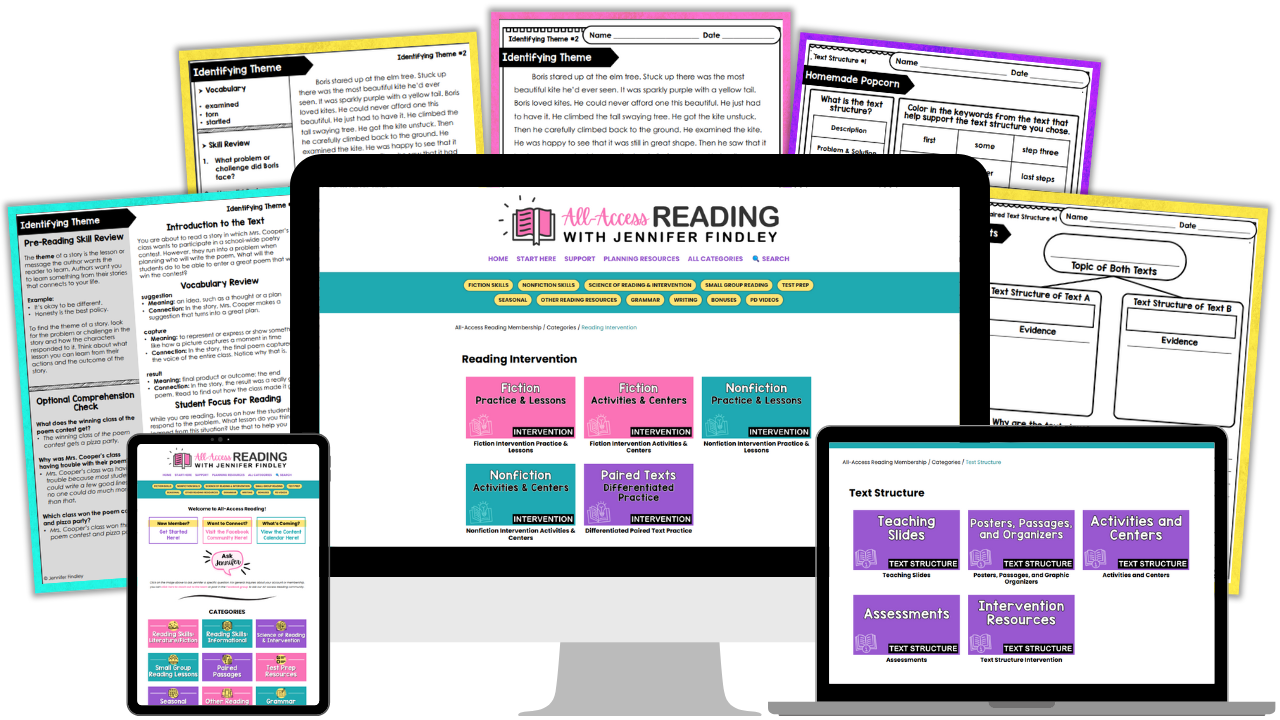
👉Click here to test drive the reading intervention centers and lessons now!


Leave a Comment