

If you have 5–10 minutes for a daily warm-up, there are a lot of ways you could use that time.
You could review yesterday’s learning, spiral older skills, prepare students for today’s lesson, etc.
And that can make choosing a warm-up feel harder than it should.
Instead of asking, What should my students do for their warm-up?, I like to start with a different question:
What do my students need this time to accomplish?
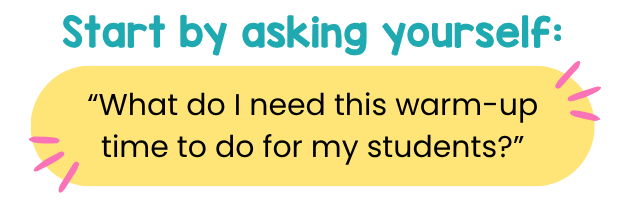
Once you know the purpose, choosing what goes into your warm-up becomes much easier.
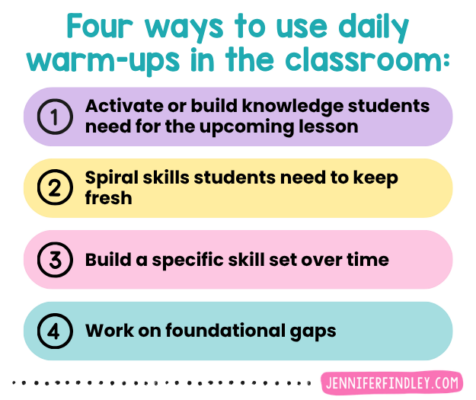
Here are four purposeful ways you can use daily warm-up time:
- Activate or build knowledge students need for the upcoming lesson.
- Spiral skills students need to keep fresh.
- Build a specific skill set over time.
- Work on foundational gaps.
Let’s look at each one and when you might choose it.
1. Use Warm-Ups to Activate or Build Knowledge for the Upcoming Lesson
Sometimes your warm-up should connect very directly to what you’re about to teach.
Think about what students need to know or be able to do in order to access the day’s lesson. Then use your warm-up to activate that knowledge or strengthen it right before they need it.
For example, before teaching students to add and subtract fractions with unlike denominators, you might have them practice creating equivalent fractions during the warm-up.
You’re not teaching the new skill yet. You’re getting something they already know—or something they need to know—ready to use.
This is especially helpful when students have learned a prerequisite skill before but don’t always seem to access it when they need it.
In this case, the purpose of the warm-up is: Build or activate the knowledge students need for what they’re about to learn.
2. Use Warm-Ups to Spiral Skills Students Need to Keep Fresh
Your warm-up does not have to connect to that day’s lesson.
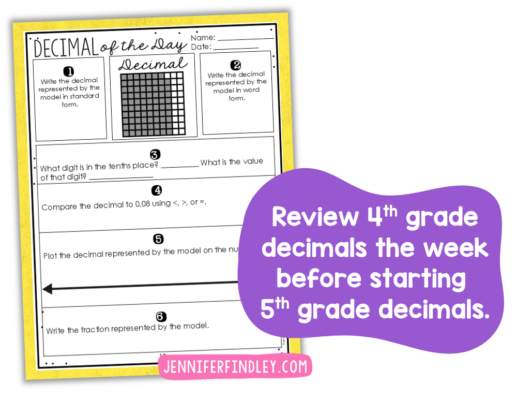
Maybe you know your students need consistent practice with skills they’ve already learned. They can do them when you’re teaching them, but after a few weeks, those skills start to get fuzzy.
Use the warm-up to spiral them.
You might intentionally bring back skills from earlier units, previous grading periods, or even previous grade levels.
In this case, your warm-up is tied less to today’s lesson and more to your overall plan for student learning.
You’re deciding:
These are skills I don’t want my students to learn once and then leave behind. I’m going to use this time to keep bringing them back.
The purpose of the warm-up is: Keep important learning fresh through consistent spiral review.
Shop This Post

3. Use Warm-Ups to Build a Specific Skill Set Over Time
There are also things we want students to get better at that don’t necessarily belong to one particular unit or lesson.
These are often skills that improve through small amounts of repeated practice over time.
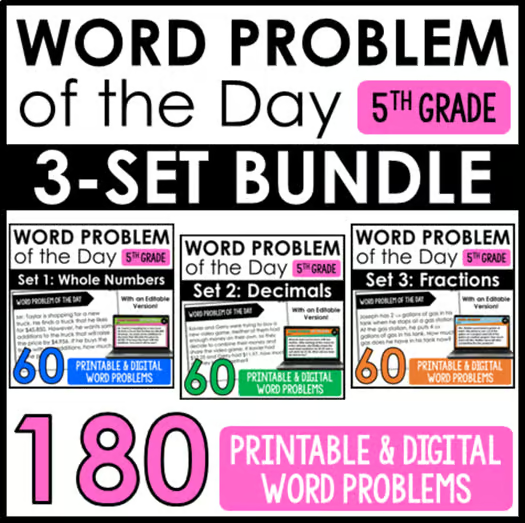
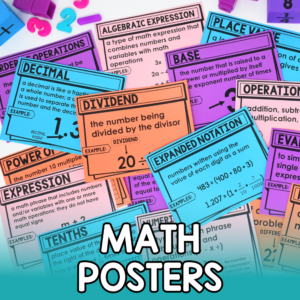
In math, that could be:
- thinking flexibly about numbers
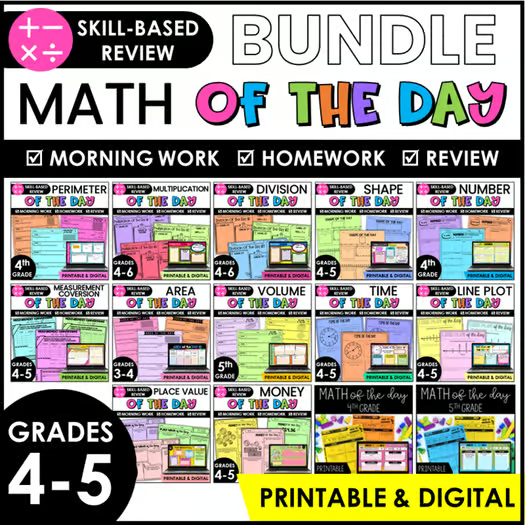
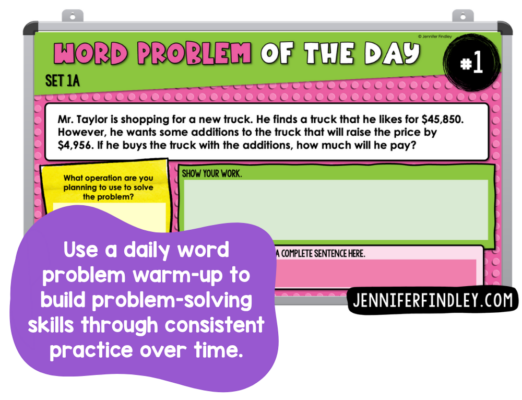
- solving word problems
- explaining mathematical thinking
- talking about math
- writing about math
Shop This Post
In reading, it could be:
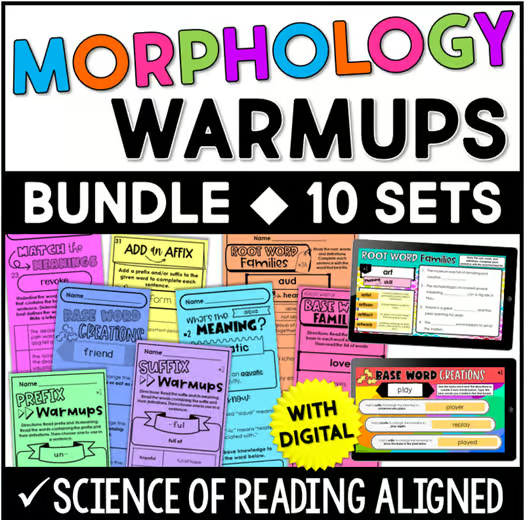
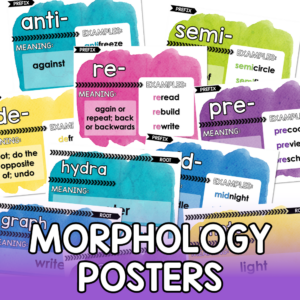
- morphology
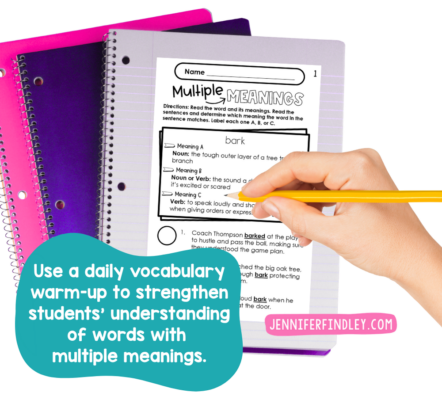
- vocabulary
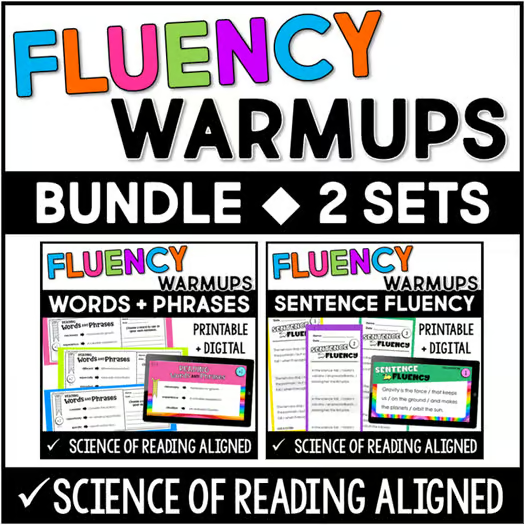
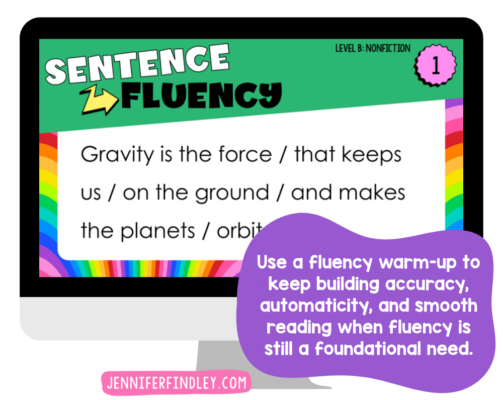
- fluency
- another reading skill that benefits from frequent, short practice
Shop This Post

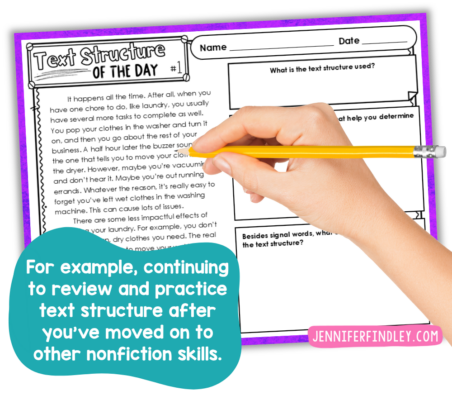
If you know your students need to become stronger at one of these things, warm-up time gives you a place to work on it consistently.
For example, maybe you decide that your students need to become much better at talking about their mathematical thinking. You could use your warm-up time for several weeks to pose a problem, have students solve it, and then talk about the different strategies they used.
Or maybe vocabulary is an ongoing need. You could use that time for short vocabulary work every day instead.
The purpose of the warm-up is: Build a specific skill or capacity through repeated practice over time.
4. Use Warm-Ups to Work on Foundational Gaps
Warm-up time can also give you a place to work on foundational skills that students still need.
This doesn’t mean trying to remediate every unfinished skill during a 5-minute warm-up. That’s obviously not realistic.
But maybe you’ve noticed one particular foundational gap that keeps getting in the way. You can use warm-up time to give students repeated exposure and practice without stopping all of your grade-level instruction to go back and reteach everything.
Maybe your upper-elementary students still need consistent practice with multiplication facts.
Maybe they need more work with basic fraction concepts before they can be successful with grade-level fraction work. Maybe older readers need continued practice with particular word-reading patterns, morphology, or vocabulary.
Those needs don’t necessarily have to become your entire lesson every day. Warm-up time gives you a small place to keep working on them.
The purpose of the warm-up is: Give students consistent practice with a foundational skill they still need.
Start With the Purpose
So when you’re trying to decide what to use for your classroom warm-ups, I would start here:
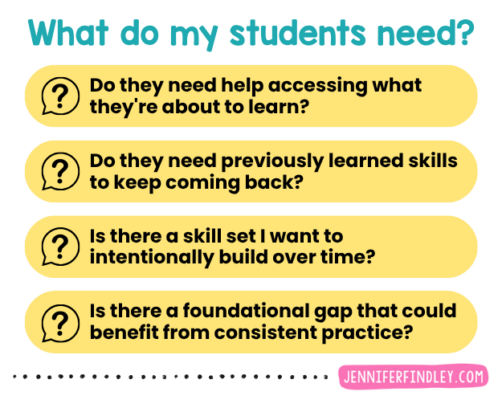
What do my students need?
- Do they need help accessing what they’re about to learn?
- Do they need previously learned skills to keep coming back?
- Is there a skill set I want to intentionally build over time?
- Is there a foundational gap that could benefit from consistent practice?
Want the Resources and Help Knowing What to Use?
If you’d like access to the resources featured throughout this post, plus ongoing support from me in figuring out what to use, when to use it, and how to make it fit your students, you can join the All-Access membership for the subject you teach.
Inside, you’ll get the resources themselves along with help navigating them so you’re not left wondering which ones make the most sense for your classroom.
Choose your subject below to learn more:




Leave a Comment