

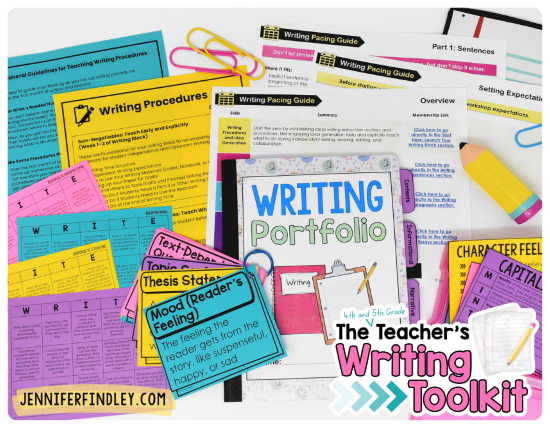
Looking for even more support on how to teach writing in 4th and 5th grade? Grab the writing toolkit that gives you resources to help you with pacing, procedures, and engagement for free.
Writing is not easy (teaching it or writing it).
If you look at language acquisition, literacy learning, and how we actually learn, writing almost always comes last. For most students, it’s harder than speaking and reading because writing requires them to produce language.
Because of that, we have to do as much as we can to get students writing right away and writing as often as possible.
In this post, I want to share one strategy you can use tomorrow, immediately, that will get your 4th and 5th grade students writing right away.
It’s called oral rehearsal.
What Oral Rehearsal Is (and What It’s Not)

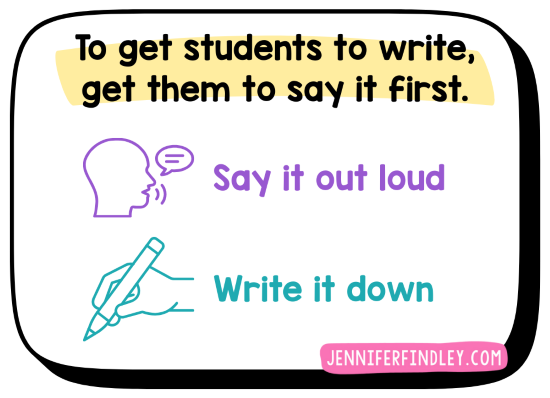
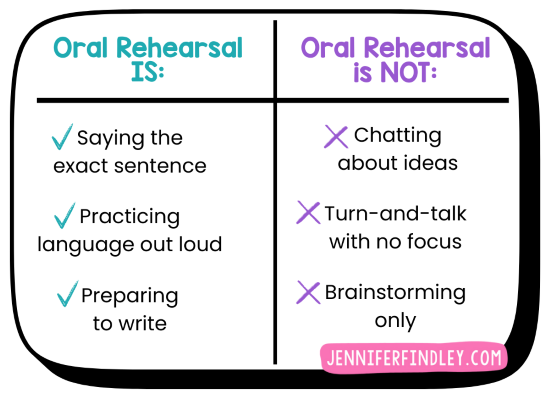
Oral rehearsal is when students SAY exactly what they are going to write before they write it.
This can happen with you if you’re working one-on-one or in a small group, but more realistically, it happens with a partner.
They don’t just talk about what they will write. They say what they are actually going to write.
What This Looked Like in My Classroom
My motto was always: If they can’t say it, they can’t write it. If my students were struggling to write, I knew I needed them to say it first.
For most of my classes, any time my students were about to write something longer than a sentence, they rehearsed it out loud with a partner before they wrote.
Even and especially in 5th grade.
Have students rehearse their writing first allowed them to:
- practice saying it
- hear their partner say it
- and have a much better chance of being able to start writing when it’s time
Is it perfect? No. Do students sometimes repeat what their partner said? Yes.
But getting students to say what they’re going to write before they write it is always worth whatever small issues come up with individual students.
How to Make Oral Rehearsal Work (Practically)
1. Assign Partners Intentionally
Do not have students find a partner randomly. I honestly don’t recommend that, especially for this.
Assign partners strategically and keep those partnerships consistent for a period of time. This avoids wasting instructional time figuring out who goes with whom.
Seat partners next to each other or place them together in your writing space so logistics don’t get in the way.
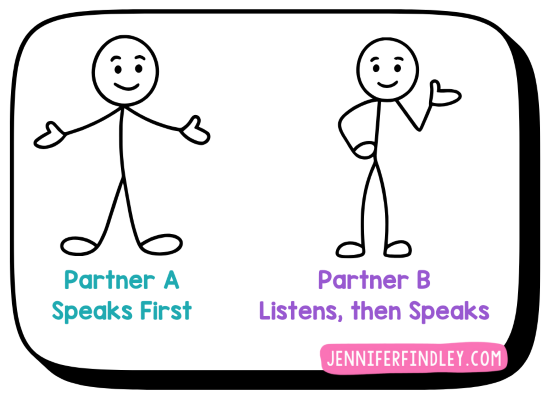
2. Use Clear A/B or 1/2 Roles
Within each partnership, assign A/B or 1/2 roles.
This matters because it lets you control who goes first. Don’t leave that decision up to students. Tell them.
Sometimes A goes first. Sometimes B goes first.
This also allows you to purposefully choose stronger speakers or writers to go first so they can support their partner.
3. Use Sentence Stems
You cannot over-support students here.
If oral rehearsal isn’t working the way you want it to, add sentence stems. Give them a way in.
This extra scaffold often makes the difference between students freezing and students actually being able to rehearse what they want to say.
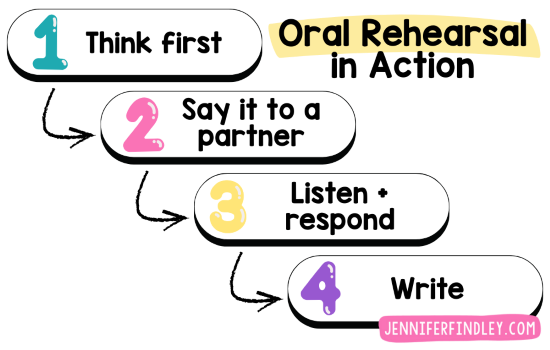
Oral Rehearsal in Action
Here’s what this looked like during writing instruction:
1. First, I would give students a task, like writing a position statement.
2. Before they talked to a partner, I had them think first. Think about your position. Look at your notes. That individual accountability matters. I might also remind them of sentence stems or show a few examples.
3. Then I’d say, “Now that you have your position in your head, turn and tell your partner.
A’s go first. B’s go next.”
If there was extra time, I’d add, “When you’re done, compare what you said and talk about what was similar or different.”
That “when you’re done” piece is important because it keeps students from disengaging.
4. Give students enough time, but not too much.You’ll find the sweet spot as you use this more.
5. After that, we’d come back together. At that point, you have options. Sometimes I had students write immediately. Other times, I had a few students share out so we could solidify ideas before writing. I made that decision based on what I heard while listening in.
The Bottom Line
Get students to say it first.
If they can’t say it, they can’t write it.
Saying it gives them the support and scaffolding they need so when it’s time to write, they can start and keep going.
Don’t be afraid to orally rehearse entire paragraphs.
Students can:
- rehearse a topic sentence
- write it
- come back together
- rehearse supporting details
- and then write those
Do whatever helps your students get started and keep working.
Join Us in All-Access Reading+
If you would love more support with teaching writing to your students (and not the version your curriculum assumes you have), I’d love to invite you to join All-Access Reading+.
It’s my premium membership for 4th and 5th grade teachers, where you get access to a complete suite of resources for teaching writing, along with grammar and reading support.
Click the link to get the details and see what it can make possible for your literacy instruction.
Want more free writing support for your 4th and 5th graders?
If teaching writing in 4th and 5th grade is difficult for you, you’re not alone. It’s really that hard, and I’d love to continue supporting you. Get your hands on my free writing toolkit to help you with pacing, procedures, and engagement. Click here or on the image to access it now!


Leave a Comment