

How to Identify & Close the Reading Gaps That Are Holding Your Students Back
If you’re reading this, you’ve probably asked yourself:
- “What’s really missing in my students’ reading skills?”
- “How do I help my 4th and 5th graders move from struggling to confident readers?”
You’ve probably heard a lot about the Science of Reading and the components that make up effective reading instruction. But in real classrooms, it’s often unclear:
Is it what you’re already doing?
A whole new system?
Or just another vague initiative no one explained?
I asked those same questions. This post reflects over five years (and counting) of studying the Science of Reading through the lens of my classroom, specifically focused on the needs of 4th and 5th grade students.
It’s a reflection of what worked, what I missed, and what I’d do differently knowing what I know now.

Is Reading Really Rocket Science?
You’ve probably heard the phrase, “Reading is rocket science.”
There’s truth in that, especially when you look at how many skills must work together.
Reading is made up of multiple, interconnected layers. One weak spot can throw off the entire system. That’s why “just read more” doesn’t always help.
It’s not about doing more.
It’s about knowing where to focus.
Identifying and Addressing Reading Gaps in 4th and 5th Graders
To support struggling readers effectively, you need to understand the core components of reading. Below, I’ll walk you through each one, explaining:
- What it is
- What to look for in the classroom
- Why it matters in upper elementary
- Why it’s often overlooked
- What to try if you suspect a gap
The 6 Essential Components of Reading (Upper Elementary Focus)
The Science of Reading highlights five foundational components:
- Phonemic Awareness
- Phonics
- Vocabulary
- Fluency
- Comprehension
I also include a sixth:
- Background Knowledge
While it wasn’t in the original National Reading Panel report, background knowledge is increasingly recognized as essential, especially in upper grades. It deeply impacts vocabulary development and comprehension.
Each component affects the others.
A weakness in one area can cause breakdowns in the whole reading process.
You may start with the most obvious need, but over time, all six areas need to be strengthened to build capable, confident readers.

1. Phonemic Awareness
What It Is
The ability to hear and manipulate individual sounds (phonemes) in spoken words. Though it’s an oral language skill, phonemic awareness directly supports reading and spelling by helping students:
- Connect sounds to letters
- Break words apart
- Develop reading automaticity
What You Might Notice
- Mispronouncing or flipping sounds (e.g., “flim” for “film”)
- Spelling based on sound only (e.g., “dragn” for “dragon”)
- Struggling to isolate or manipulate sounds orally
Why It Still Matters in 4th and 5th Grade
Phonemic awareness is the foundation of decoding.
If it’s weak, students will:
- Struggle with multisyllabic words
- Avoid unfamiliar text
- Hit a wall with decoding growth
Because it’s not typically addressed in upper grades and isn’t always on our radar, it’s important to involve your MTSS team or literacy coach if you suspect this is the root issue.
2. Phonics (with Meaning)
What It Is
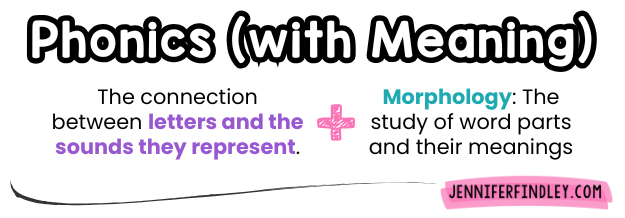
Phonics is the connection between letters and the sounds they represent. In upper elementary, this also includes morphology: the study of word parts (prefixes, roots, suffixes) and the meaning they carry.
At this stage, students need more than just sound-symbol correspondence. They need to connect words to both structure and meaning.
What You Might Notice
- Pausing or guessing at longer or unfamiliar words
- Spelling based on sound only (e.g., “infomashun”)
- Skipping or misreading prefixes, suffixes, or roots
- Confusing look-alike words (e.g., “effect” vs. “affect”)
- Avoiding longer words in writing
Why It Still Matters
By 4th and 5th grade, texts include multisyllabic academic vocabulary. Students must:
- Decode by structure
- Spell based on patterns
- Recognize meaningful word parts
- Understand morphology across content areas
Why It Often Goes Unnoticed
Students may appear fluent because they’ve memorized many words. But unfamiliar words reveal the gap. These struggles are often misidentified as comprehension issues.
What to Try
Choose a few challenging or content-area words. Ask students:
- “How did you figure that word out?”
- “Can you explain its parts?”
If they hesitate or guess, they likely need explicit instruction in phonics and morphology.
3. Vocabulary (and the Two Paths)
What It Is
Vocabulary is the set of words students can understand, use, and figure out, both through direct instruction and independent strategies.
What You Might Notice
- Decoding words correctly but not understanding them
- Skipping unfamiliar words
- Using vague or repetitive language in writing
- Misusing academic terms
- Struggling to explain word meanings
- Misinterpreting context clues
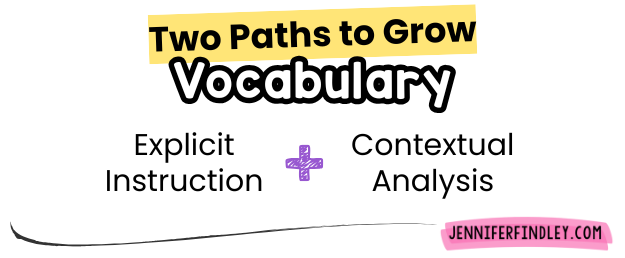
Two Paths for Vocabulary Growth
1. Explicit Instruction
Teach vocabulary directly using:
- Kid-friendly definitions
- Contextual examples
- Practice using the word in speech or writing
2. Contextual Analysis
Teach students how to figure out unfamiliar words using:
- Context clues
- Morphological clues (prefixes, roots, suffixes)
💡 Note: Morphology plays a role in both phonics and vocabulary. Upper elementary students need repeated, explicit exposure.
Why It Often Goes Unnoticed
Students may read fluently and speak confidently, but still misunderstand key terms. Vocabulary gaps show up most clearly in content areas and written responses.
What to Try
Choose several high-leverage words from a current text. Ask students to:
- Define in their own words
- Use in a sentence
- Identify word parts
If they rely only on surface context, they likely need deeper vocabulary instruction.
4. Fluency
What It Is
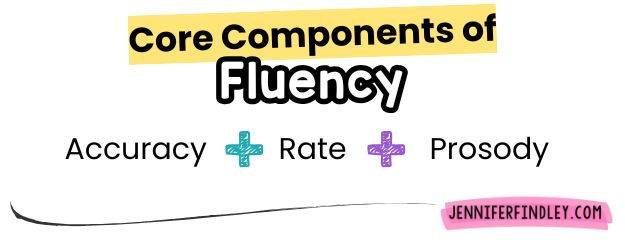
Fluency is the ability to read with:
- Accuracy
- Appropriate rate
- Prosody (expression and phrasing)
It’s often the first thing we notice, but it’s frequently misunderstood. Many fluency issues are decoding or vocabulary issues in disguise.
The 3 Core Components
Accuracy
Reading words correctly and automatically.
Rate
Reading at a speed that supports comprehension, not too fast or too slow.
Prosody
Using tone and phrasing to reflect meaning.
Especially important for:
- Chunking complex sentences
- Making sense of sentence structure
- Holding meaning across longer passages
What You Might Notice
- Word-by-word or robotic reading
- Flat tone or overly rushed delivery
- Frequent errors, hesitations, or backtracking
- Breaking up sentence meaning with poor phrasing
- Avoidance of reading aloud
Why It Matters
Fluency isn’t about performance. It’s about making meaning. In upper elementary, it helps students:
- Navigate complex syntax
- Understand the author’s tone and intent
- Maintain comprehension across long texts
What to Try
After ruling out decoding issues, build fluency with:
- Modeled fluent reading
- Partner or choral reading
- Practice with slightly easier texts
- Phrasing activities such as oral rehearsal or visual chunking
5. Comprehension
What It Is
Comprehension isn’t a standalone skill. It’s the result of multiple components working together.
Think of it like an engine.
Vocabulary, background knowledge, decoding, fluency, and syntax must all function together to make meaning.
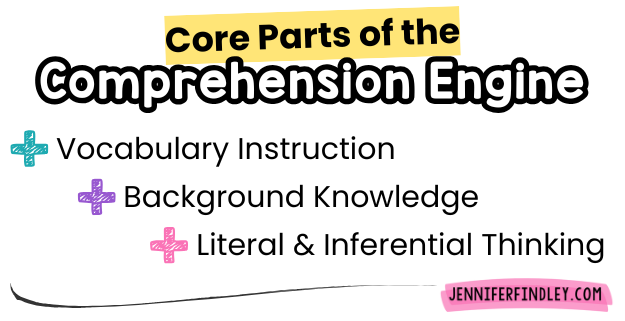
Core Parts of the Comprehension Engine
- Vocabulary Instruction: both explicit and inferential
- Background Knowledge: content-rich exposure across subjects
- Literal and Inferential Thinking: moving beyond surface-level questions
What You Might Notice
- Fluent readers who can’t explain what they read
- Copying or restating instead of summarizing
- Difficulty following longer ideas or cause and effect
- Forgetting main ideas quickly
- Struggles with author’s purpose or structure
Tune-Ups to Support Comprehension
When comprehension stalls, revisit:
- Phonics and decoding
- Word recognition
- Syntax and sentence structure
- Fluency with phrasing
You don’t need to teach them all at once. But you do need to know where to look when comprehension breaks down.
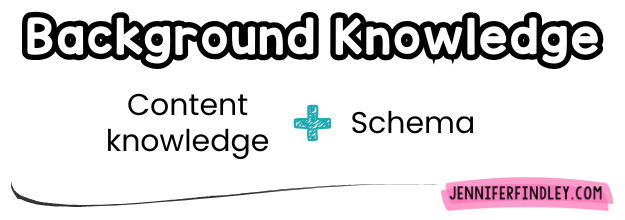
6. Background Knowledge (The Missing Link)
What It Is
Background knowledge is what students already know about a topic. It includes:
- Content knowledge (history, science, literature)
- Schema (life experiences, routines, social norms)
Why It Matters
Even if a student can decode and read fluently, they may still struggle with comprehension if they lack knowledge of the subject.
Background knowledge helps students:
- Understand vocabulary in context
- Visualize events or concepts
- Fill in gaps the author assumes
- Engage with unfamiliar topics
- Retain and apply what they read
What You Might Notice
- Fluent reading but unclear or confused comprehension
- Struggles with nonfiction
- Literal interpretations of figurative language
- Confusion around unfamiliar time periods, settings, or ideas

Wrapping It Up: Your Roadmap to Support
Let’s recap the six key components that may be holding your students back:
- Phonemic Awareness
- Phonics (with morphology)
- Vocabulary
- Fluency
- Comprehension
- Background Knowledge
These components are not just checkboxes. They are interconnected systems. Strengthening each one gives your students the tools they need to become confident, capable readers.
Want to Go Deeper?
Much of what I’ve shared is grounded in the research and work of:
- Dr. Louisa Moats
- Dr. David Kilpatrick
- Hollis Scarborough
- Dr. Anita Archer
- The National Reading Panel
- Orthographic mapping and the Simple View of Reading

Leave a Comment