

If you teach 4th or 5th grade, then you already know how often comprehension becomes the struggle. For many students, it’s the thing that holds them back from deeper learning, and it’s not a simple skill to teach. Comprehension is layered, and it’s more of an outcome than a step-by-step process.
The challenge is this: comprehension takes time, but so does everything else.
We still have standards to hit. Lessons to get through. Pacing guides to follow. It’s not realistic to spend the whole year only focusing on comprehension and ignore the rest.
So how do we do both? How do we teach the standards and also support comprehension in a way that actually sticks?

Here’s what worked for me. I started approaching every whole group reading lesson as a comprehension lesson, no matter the skill I was focused on. Whether it was theme, text structure, point of view, or figurative language, these four steps always made their way into my instruction.
1. Give a Quick Preview/Introduction to the Text
I always opened my lessons by giving students a quick preview of the text. This helped them focus and gave them something to latch onto before diving in.
Sometimes I used a structured introduction like this:
“In this story, the main characters find themselves lost at a carnival. A place that’s usually fun can quickly feel overwhelming when you don’t know where you are. Have you ever been to a carnival? What would it feel like to suddenly realize you were lost in the middle of all the noise and excitement?”
Other times I kept it simple:
“The title is Lost at the Carnival. That gives us a pretty strong clue about what might happen. What do you think this story could be about?”
The goal was always the same. I wanted to activate or build background knowledge before we started reading. If students didn’t know what a carnival was, we figured that out early. These quick conversations filled the gaps that might have slowed them down later.
2. Teach Vocabulary on the Fly
I taught vocabulary explicitly in small groups and during word study, but during whole group reading, I used whatever came up in the text.
For example, I’d be reading a sentence like:
Without warning, he found himself dealing with an unexpected nuisance.
And I’d pause to say:
“Nuisance means something or someone that makes things harder or a little annoying.”
If I thought the word was worth reinforcing, I’d add a task:
- “Turn and talk. What’s something that can be a nuisance at school or home?”
- “Use the word ‘nuisance’ in a sentence.”
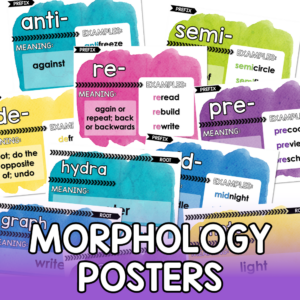
For the word unexpected, we’d look at the prefix “un” and break it apart. I didn’t define the word for them. I’d ask students what they thought it meant based on the morphemes, then let them talk it out with a partner before we confirmed the meaning together.
If a word had strong context clues, I’d use that moment to model how to use the sentence around the word to figure it out. Or I’d have them try it first.
The key here is that I didn’t stop the flow of the lesson. I just taught the words as they came, right there in the reading.
3. Use Active Questioning Strategies
I asked questions throughout the entire read-aloud. Usually at the end of every paragraph or major moment.
Some were simple:
- “What just happened?”
- “Tell me what’s going on right now.”
Others were more connected to the skill we were focusing on:
- “What does this show us about the character?”
- “What’s motivating this character?”
The point was to keep them engaged and thinking as we read. I didn’t wait until the end of the story to check for understanding. I built it into the reading itself.
This approach helped students build a mental model of what was happening. It also gave them regular opportunities to interact with the text. And honestly, it kept them way more focused than waiting until the end for questions.
4. Always Connect Reading to Writing
I never ended a reading lesson without connecting it back to writing in some way.
Sometimes that meant a stop-and-jot response in their notebook.
Other times it was a structured response to a comprehension question.
We also used graphic organizers that we filled in during the reading, then turned into a written piece after.
To support students, I gave them:
- Sentence stems to help them start their ideas
- Word banks so they weren’t stuck on vocabulary
- Time to talk to a partner before writing so they could think it through
These quick writing connections were simple but powerful. They helped students process the reading, organize their thinking, and build confidence in moving between reading and writing.
A Quick Recap
Here are the four things I made part of every whole group reading lesson, no matter what we were reading or what standard we were focused on:
- Preview the text to activate or build background knowledge
- Teach vocabulary as it comes up in the text
- Ask questions throughout the reading
- Connect reading to writing in a meaningful way
By doing this consistently, comprehension became part of everything we did. It wasn’t something extra. It wasn’t something separate. It was just how we read.
Frequently Asked Questions
What about the other components of reading, like fluency and decoding?
These were naturally embedded when I read aloud. When I read aloud, I modeled fluent reading.
If fluency was an issue for students, I incorporated additional fluency practice as needed. This can include:
- Rereading a complex sentence
- Echo reading
- Rereading a paragraph together
- Repeated reading of a common passage after the lesson so they’ve heard me model it fluently and can then practice it fluently on their own
As for decoding, I was doing that work for them when I read aloud, so I naturally modeled decoding. If decoding was a major area of weakness for most of my students, I also incorporated think-aloud decoding strategies. For example, I might have pretended I didn’t know the word, broken it into syllables, flexed the vowel sound, and asked for students’ help in figuring it out.
Do you have this available in your resources on Teachers Pay Teachers?
No, because I varied it depending on my students.
The questions I asked were based on where we were in the progression of reading instruction. If we were at the beginning of learning a skill and I just wanted them to comprehend the story, I might have asked basic comprehension and prediction questions. Later, when we were practicing an already introduced skill—like theme—I would have asked more targeted questions:
- What’s the character’s motivation?
- What does this reveal about the theme?
- Do we have any clues so far?
Vocabulary instruction was also highly dependent on my specific students and their needs.
However, I do have small group lessons that include these components as part of my planned instruction. If you’re looking for structured support, those resources might be a great fit!
What about student talk? Did you have your students talking?
Yes! I was constantly having my students talk whether it was answering questions, discussing a vocabulary word, or just responding to a part of a story.
I used:
- Partner talk
- Choral responses
- Answering me directly
Most of the time, students were talking to a partner before talking to me—but there was always a lot of discussion happening.
Did you do this when you were reading a novel, a picture book, or a passage?
All three!
If I was reading any story to my students—whether it was a picture book, a chapter from a novel, or a passage—I embedded these strategies to help them comprehend the text.
Any other questions? Let me know in the comments!

Leave a Comment