

If you watch students during independent reading, a pattern shows up quickly: most choose fiction. It’s what they’re comfortable with and what they feel successful reading.
That preference shows up in comprehension data, too. Fiction is often a strength. Nonfiction is where understanding breaks down.
Students skim. They flip pages, look at pictures, and move on without really making sense of the text.
The problem isn’t (always) effort or stamina.
Sometimes, students don’t have a clear way to track meaning as they read informational texts.
In this post, I’ll share a simple nonfiction reading response that helps students stay accountable and improve comprehension.
To read the fiction comprehension version, click here!
The Task: Topic–What–Detail Checkpoint
Here’s how it works. At teacher-chosen checkpoints, students pause and jot down three things:
Topic – what the section is mostly about
What the author is teaching (about that topic) – the main idea
A detail that shows – one example or fact that supports the main idea
Students can use a three-column chart or just write quick sentences.
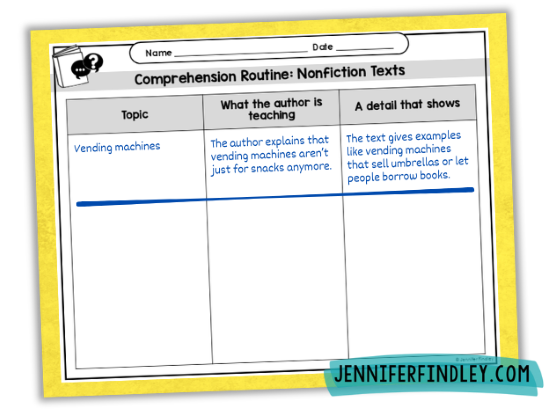
Example from a “Vending Machines” passage:
Topic: Vending machines
What the author is teaching: The author explains that vending machines aren’t just for snacks anymore.
Detail that shows: The text gives examples like vending machines that sell umbrellas or let people borrow books.
How to Set the Checkpoints
Checkpoint frequency depends on the reader and the text:
- Some students may pause after every short section.
- Others can checkpoint after a full paragraph or subheading.
- Stronger readers might only need one checkpoint at the end.
When you collect checkpoints, a quick glance shows you exactly who grasped the main idea and who was just skimming.
Why This Routine Works
This isn’t just about keeping kids busy or on task (although that is an added bonus).
When students pause to name the topic, write the author’s main point or idea, and anchor it with a detail, they’re doing the exact work strong nonfiction readers do.
Decades of reading research point to summarizing and anchoring ideas in evidence as high-impact comprehension practices.
That’s why this routine works. It keeps students accountable and improves comprehension in the process.
How to Teach It
Start with a shared text or read-aloud and say:
“You’re going to start showing what you read with a quick 3-step routine: topic, what the author is teaching about the topic, and a detail that shows.”
Then you model it for your students.
Example paragraph:
School buses are easy to spot for a reason. They are painted bright yellow to help keep students safe. Research shows that yellow is one of the first colors the human eye notices, especially in low light or foggy weather. This makes it easier for drivers to see a stopped bus from far away and react more quickly. The color choice isn’t about style; it’s about visibility and safety.
Topic: School buses
What the author is teaching: School buses are yellow because it makes them safer.
Detail that shows: Yellow is one of the easiest colors to see, especially when it’s foggy, so drivers can see the bus sooner.
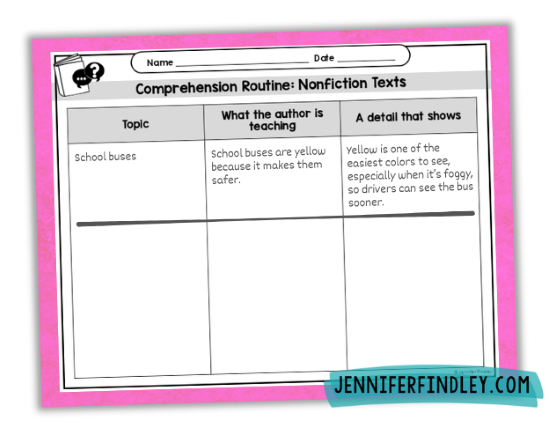
To download the organizer shown above, click here.
Make It a Must-Do
Consider making this task part of a Must-Do/May-Do structure.
Must-Do:
Students complete at least one Topic–What–Detail checkpoint during reading.
May-Do:
After that, let students choose from options such as:
- Draw a labeled diagram.
- Write a one-sentence summary.
- Create a quiz question.
- Sketch and caption a key detail.
Teacher Tips
- Use this as your default independent nonfiction reading response.
- Adjust checkpoint frequency based on student needs.
- Focus on accuracy, not length.
- Collect checkpoints weekly.
What About Students Who Are Ready for More?
Just like with fiction, some readers will quickly outgrow the basics.
For readers who are ready to move beyond basic comprehension, this adds depth without adding complexity.
Here’s an easy next-step ladder you can introduce:
FACT:
F – Fact: Identify a key fact or detail.
A – Author’s point: State what the author is teaching with that fact.
C – Connection: Link it to another fact in the text or prior knowledge.
T – Text structure: Notice how the author organized the information (cause/effect, compare/contrast, etc.).
This extension pushes students to go beyond surface-level reading, while still keeping the routine structured and manageable.
Want Done-For-You Practice with Engaging Texts?
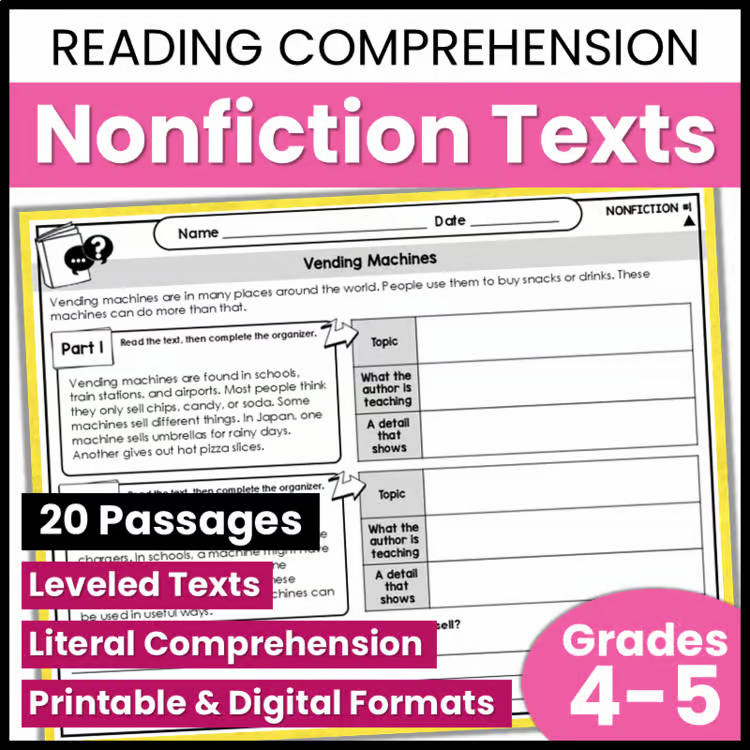
This nonfiction response task works with any text, but if you love having engaging ones to offer your students, you can purchase this done-for-you resource that includes engaging texts and ready-made stopping points.
If this makes you excited about helping your readers, you’re going to love what’s inside my All-Access Reading+ membership. You’ll have an entire library of resources, routines, and tools that support every kind of reader in your classroom, including the resource shared above and its fiction counterpart.

Leave a Comment