

Ask any group of teachers about independent reading and you’ll hear something like this:
“Most days, it feels like a waste of time.”
And then, almost in the same breath:
“But it’s so important. They’re never going to get better unless they read.”
That’s the dilemma.
We know students need time to read, but without structure, accountability, and focus, independent reading can feel like wasted time.
In this post, I’m sharing one go-to independent reading strategy that creates built-in accountability and the bonus—it actually improves comprehension, too.
To read the nonfiction comprehension version, click here!
The Task: Who–Did What–Where Checkpoint
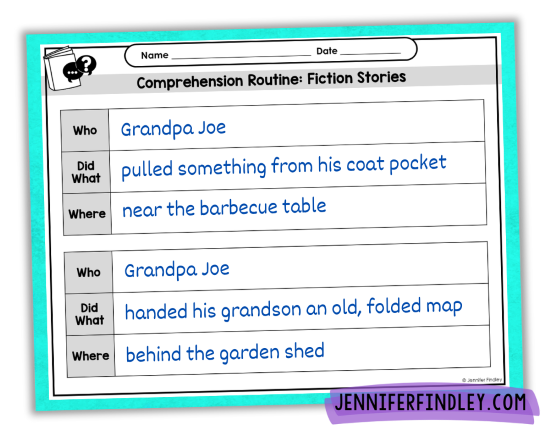
It’s simple but powerful. At checkpoints you determine, students pause and quickly record:
- Who – the most important character(s)
- Did What – the main action or event
- Where – the setting or context
They can write a sentence or use a simple three-column chart. Either way, they’re pausing to identify the core narrative elements before moving on.
How to Set the Checkpoints
This is where you get to make it fit your readers.
- Some students might pause after every page.
- Others might checkpoint every paragraph.
- Strong, self-directed readers? They’ll likely have one checkpoint at the end.
Early in the year, use more frequent pauses to build the habit. Once the routine is automatic, back off and give them more freedom.
At the end of the week (or day), collect their checkpoints. A quick scan tells you immediately who really read and who didn’t. It’s accountability built in, but without busywork.
Why This Routine Works
Here’s why this works:
- It keeps students accountable. They can’t just flip pages or fake read because they know they’ll have to stop and capture what’s happening.
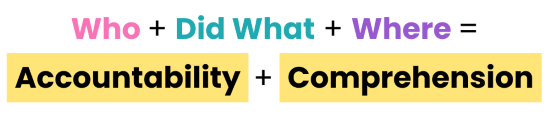
- At the same time, it builds comprehension. Pausing to name the Who, Did What, and Where forces them to track characters, events, and setting which is the backbone of understanding any story.
That combination is the sweet spot: students stay on task, and their comprehension grows with practice.
Bonus: If your students aren’t comprehending, you’ll know right away. Their checkpoints make it obvious when they’ve missed the main character, the action, or the setting, so this strategy doubles as a quick assessment tool for monitoring student understanding.
How to Teach It
Choose a shared text or read-aloud and say:
“You’re going to start showing what you read with a quick 3-step routine: Who, Did What, and Where. That’s it. Sometimes you’ll do it once. Sometimes more. I’ll tell you when to pause.”
Then model it in kid-friendly terms:
Example sentence:
“Marcus got followed by the rain on the playground.”
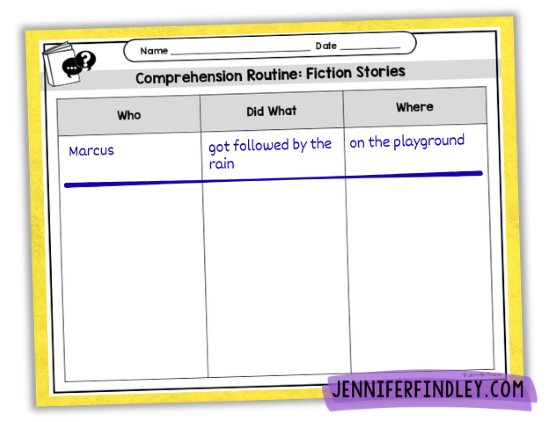
To download the organizer shown above, click here.
Practice Together
- Start with a short chunk and model a checkpoint together.
- Build stamina with longer passages and multiple checkpoints.
- Wrap it up with a summary checkpoint at the end of the reading.
Remind students: checkpoint frequency will vary. You’ll guide when and how often they pause.
Mixing It Up
This 3-step routine should be your anchor, but don’t keep it static all year. Add variety when needed:
- Seasonal tasks to make it fun
- Monthly mix-ins for novelty
- Test-prep style responses before big assessments
You can also toggle between sentence vs chart formats, and give students choice when appropriate. If fatigue kicks in, try something new for a week or two. Then come back to the checkpoint with fresh energy.
Make It a Must-Do
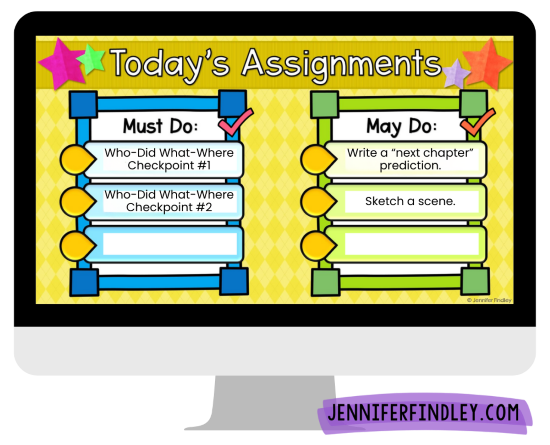
Another option is to make it part of a must-do/may-do routine or checklist.
Must-Do:
Students complete at least one Who–Did What–Where Checkpoint during their reading. This keeps the core comprehension routine in place and gives you a quick check for understanding.
May-Do:
After the checkpoint, let students choose from a few more engaging options to wrap up. Think:
- Sketch a scene.
- Write a “next chapter” prediction.
- Record a voice memo retelling.
- Create a text message conversation between characters.
- Highlight the most surprising moment and why.
This approach gives you accountability without burnout and gives students choice.
Teacher Tips
- Use this as your default or must-do independent reading response.
- Match checkpoint frequency to the reader and text.
- Focus on accuracy, not length or conventions (within reason).
- Collect them weekly to track growth and engagement.
If you’ve ever wondered whether independent reading is worth the time, the Who–Did What–Where Checkpoint is how you make it matter.
It keeps students accountable while also building their comprehension every time they pause.
👉 Stop at a checkpoint.
👉 Record Who–Did What–Where
Want Done-For-You Practice with Engaging Texts?
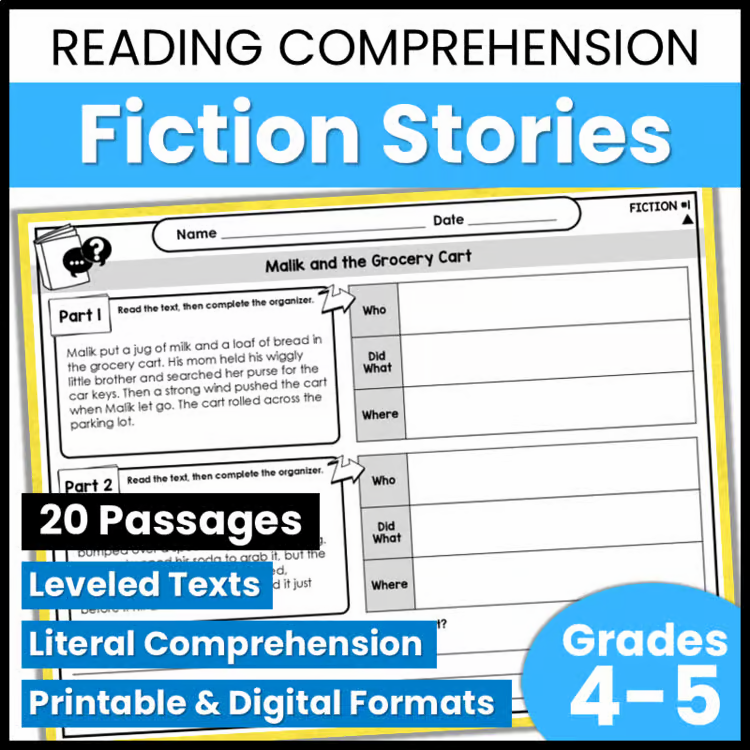
This fiction response task works with any story, but if you love having engaging ones to offer your students, you can purchase this done-for-you resource that includes engaging stories and ready-made stopping points.
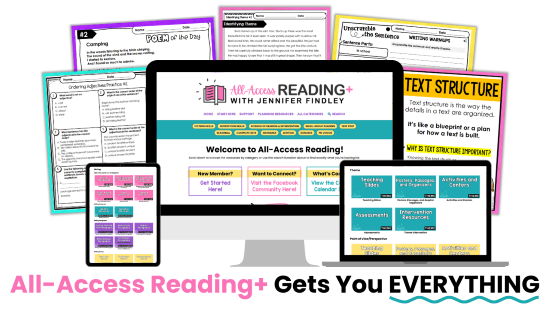
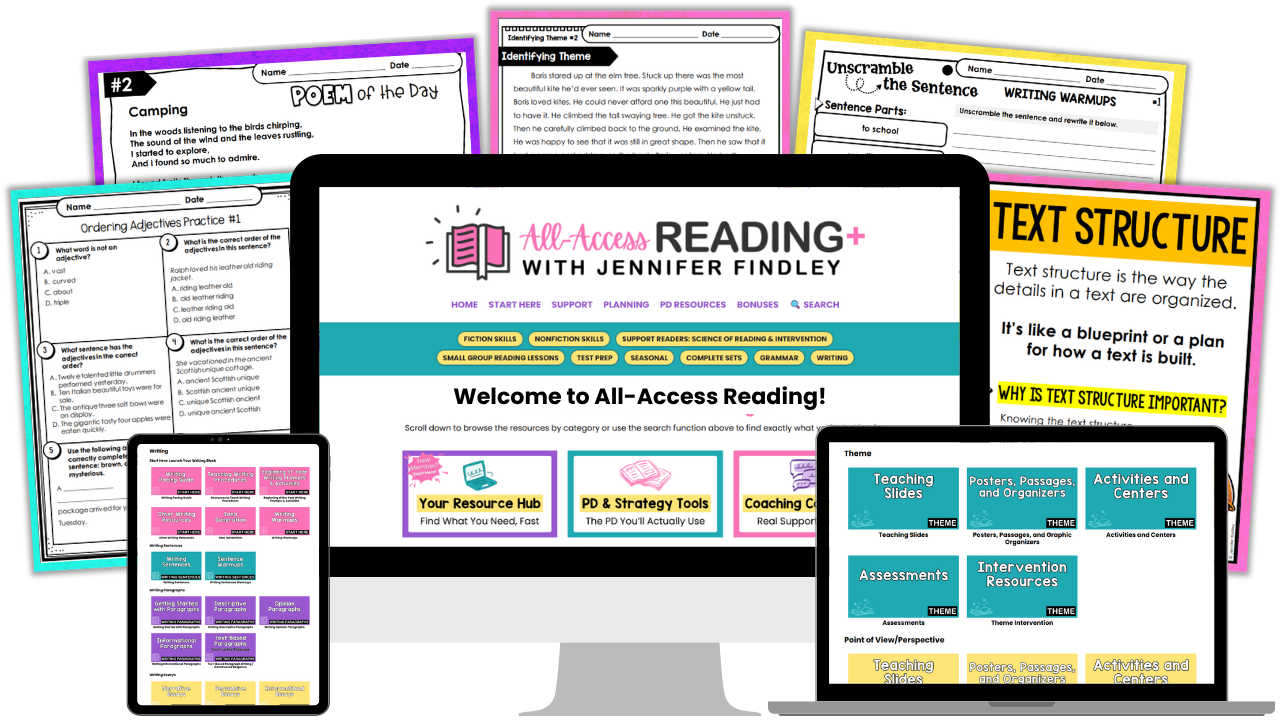
If this makes you excited about helping your readers, you’re going to love what’s inside my All-Access Reading+ membership. You’ll have an entire library of resources, routines, and tools that support every kind of reader in your classroom, including the resource shared above and its fiction counterpart.

Leave a Comment